


BINUS Psychology Students Present Research at WE ARE Student International Conference 2026
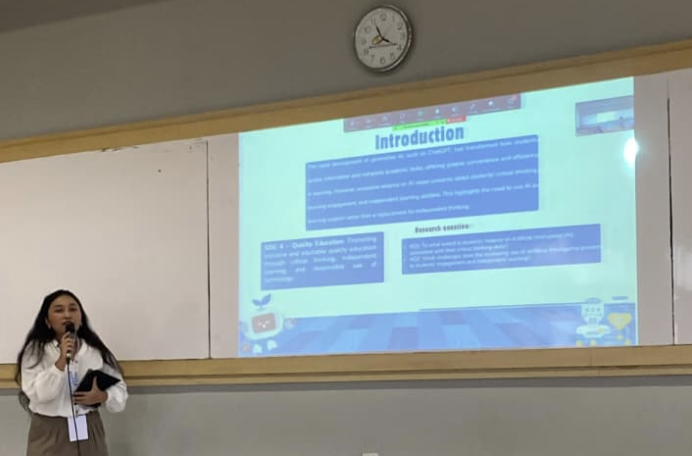
BINUS Psychology students successfully presented their research at the WE ARE Student International Conference 2026, held at BINUS University, Alam Sutera Campus, from 23 to 25 November 2026. The research, entitled “From AI Reliance to Critical Thinking: Rethinking Technology-Integrated Teaching for Students in the Digital Era,” represents an academic initiative developed through the Innovative Teaching Strategies course
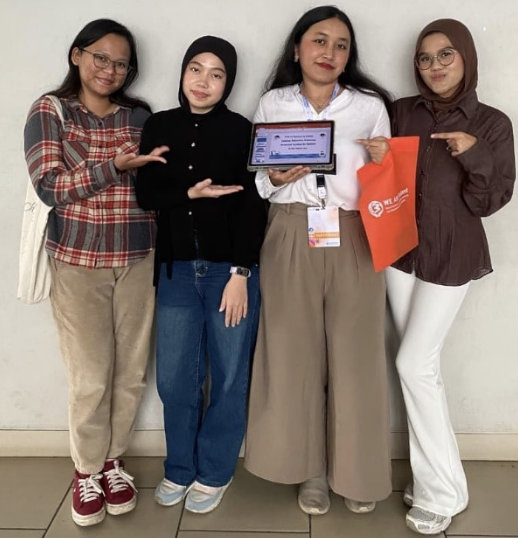
The research was conducted by four Psychology students, Natara, Aulia, Elisya, and Elisabeth, under the supervision of Dr. Nanang Suprayogi, the lecturer of the Innovative Teaching Strategies course. This achievement demonstrates how classroom learning can provide opportunities for students to engage in academic research, develop scientific perspectives, and contribute to discussions on contemporary educational challenges.
The study addresses the growing influence of Artificial Intelligence (AI) in education, particularly how students increasingly rely on AI-powered tools to support their academic activities. While AI offers significant opportunities to facilitate learning, its extensive use also raises important questions about students’ independent thinking, analytical abilities, and critical thinking development. The research highlights the importance of rethinking how technology is integrated into teaching and learning processes.
Through this research, the students emphasize that technology should not merely serve as a tool for providing quick answers or completing academic assignments. Instead, AI should be integrated into learning environments in ways that encourage students to question information, evaluate evidence, explore alternative perspectives, and develop independent conclusions. Critical thinking remains an essential competency that students need to strengthen in navigating the increasingly complex digital learning environment.
The research also reflects the importance of innovative teaching strategies in responding to changes in contemporary education. Educators are encouraged to design learning experiences that balance technological assistance with active student engagement, intellectual curiosity, and independent reasoning. Rather than discouraging the use of AI, educational institutions need to promote responsible and meaningful technology integration that supports deeper learning and students’ cognitive development.
The WE ARE Student International Conference 2026 provided an opportunity for the students to share their research findings, communicate their academic ideas, and participate in an international academic forum. Presenting their work at the conference was also a valuable learning experience, allowing them to develop academic presentation skills, strengthen their confidence, and gain broader perspectives on current issues in education and technology.
Dr. Nanang Suprayogi highlighted the importance of encouraging students to become active participants in research and knowledge development. Through the Innovative Teaching Strategies course, students are encouraged not only to understand educational theories and innovative learning approaches but also to apply their knowledge in examining real-world educational challenges. The students’ participation in this conference represents an important step in connecting classroom learning, research activities, and international academic engagement.
This achievement reflects BINUS University’s commitment to fostering a research-oriented learning environment and empowering students to develop their academic potential. As Artificial Intelligence continues to transform education, the research offers an important reminder that the future of learning should not be determined solely by technological advancement, but also by the ability of students to think critically, learn independently, and use technology responsibly. Congratulations to Natara, Aulia, Elisya, and Elisabeth on this achievement!
Dibuat oleh: Muhamad Nanang Suprayogi, S.Psi, M.Si, Ph.D
Comments :