


Doing Interview: Questions and Their Uses
In research and psychological studies, observation and interviews are important methods used to gather information and understand human behavior. Conducting an interview required preparation, clear structure, and the ability to ask appropriate questions. Through interviews, researchers can explore people’s experiences, thoughts, and perspective in a deeper and more detailed way.
In the Methods of Observation and Interview course, students learn how different types of questions influence the quality of information gathered. Interviews often use a combination of open and close questions. Open questions allow interviewees to explain their own experiences in their own words, while closed questions focus on obtaining specific information. Both types of questions are important depending on the purpose of the interview.
Another important skill discussed in the class is the use of probing questions, which are follow-up questions used to explore answers deeply when responses are unclear or incomplete. Probing helps interviews gain more meaningful information. In addition, students learn the importance of asking neutral questions in order to avoid influencing the interviewee’s answers and to maintain objectivity during the interview process.
The structure of an interview is also an essential element. A well-prepared interview usually includes an opening, the main body of questions, and a closing stage. The opening helps build rapport and trust with the interviewee, while the body focuses on gathering the necessary information. The closing stage allows the interviewer to summarize the discussion and ensure that all important topics have been covered.
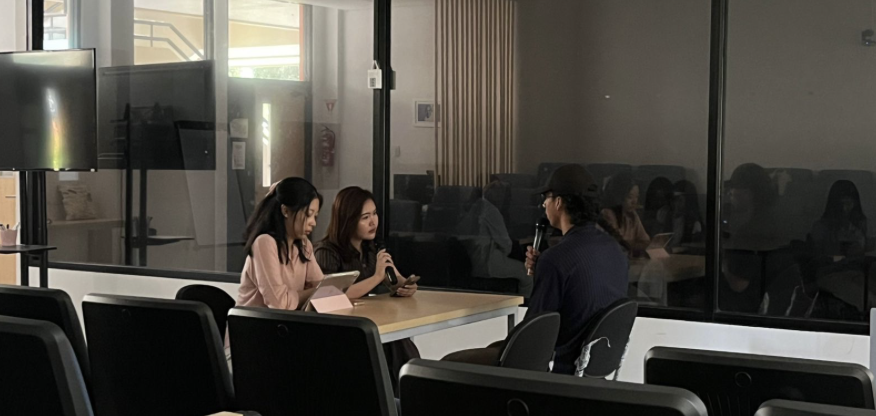
This material was observed during a sit-in session of the Methods of Observation and Interview class. During the session, students prepared and carried out interview scenarios while applying the techniques discussed in class. They arranged the sequence of questions, starting from broader questions and gradually moving to more specific ones, while also using probing techniques when necessary.
During the activity, observers carefully watched how the interviews were conducted and later provided honest feedback regarding the questioning style, communication, and structure of the interview. Ethical aspects were also emphasized, such as the use of consent forms and obtaining permission before recording the interview. The activity took place in the Lab Psychology, where students practiced applying interview techniques in realistic learning settings.
Through this activity, students were able to better understand how theoretical concepts of interviewing can be applied in practice, while also learning how observation and constructive feedback can help improve interviewing skills.
Written by: Athaya Arysa Sidharta
Edited by : Andrea Prita Purnama Ratri & Privianda Azahra
Comments :