



Individual Differences and Special Educational Need
In the learning process, students do not all have the same abilities, learning style, or pace of understanding. Each student has unique characteristics that influence how they process information and perform academically. Because of these differences, teachers need to understand that effective teaching requires flexibility and awareness of student’s diverse needs.
In educational psychology, the concept of individual differences explains that students vary in cognitive abilities, learning styles, and background. These differences can affect how students understand material and participate in classroom activities. Several theories of intelligence help explain these variations, including Spearman’s “g” factor, Cattell’s fluid and crystallized intelligence, Gardner’s multiple intelligences, and Sternberg’s triarchic theory. These theories highlight that intelligence is complex and can’t be measured only through academic performance or IQ scores.
The class also discussed students with special educational needs, who may require adapted teaching methods or additional support to succeed in school. Examples include students with learning disabilities, attention-deficit hyperactivity disorder (ADHD), communication disorders, or autism spectrum disorder. In addition, some students may experience physical or sensory challenges, such as visual or hearing impairments, which can also affect their learning process.
On the other hand, some students may have advanced cognitive abilities, often referred to as giftedness. Gifted students may demonstrate exceptional problem-solving skills, creativity, or the ability to learn quickly. Because of this, they may also need special educational support so their talents can develop fully.
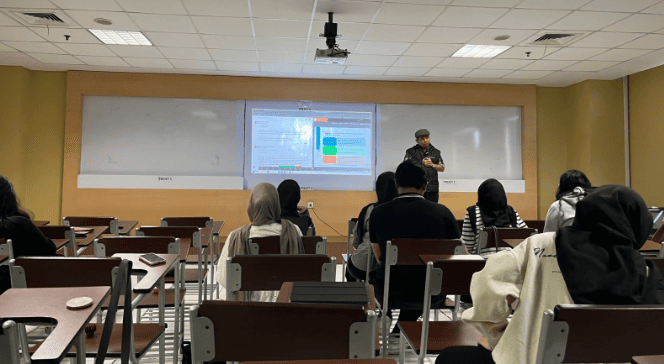
This interesting topic was observed during a sit-in session of Educational Psychology class that discussed Individual Differences and Special Educational Needs. During the lecture, the lecturer explained the concepts using presentation slides and examples related to the real classroom situations. Students were attentive, took notes, and followed the explanation carefully.
The session created a focused and engaging learning environment where students could better understand how psychological concepts can be applied in an educational environment, especially in supporting students with diverse learning needs.
Written by: Athaya Arysa Sidharta
Edited by :Andrea Prita Purnama Ratri & Privianda Azahra
Comments :